Consulting Services for Small Businesses
Gemba Kaizen Events
Cell Design and Layout Events
Cell Design and Layout Events
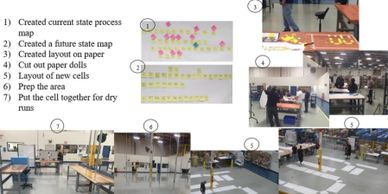
These events provide a structured methodology for implementing Lean in office and factory. It details the kaizen event process—covering preparation, execution, and follow-up—and highlights the key factors for effective, results-driven implementation. This disciplined approach is vital for successful Lean transformations.
Cell Design and Layout Events
Cell Design and Layout Events
Cell Design and Layout Events
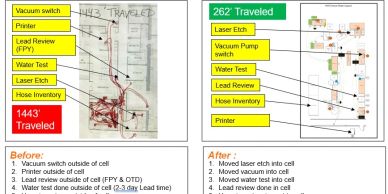
These events incorporates key Lean Manufacturing principles and focuses on essential aspects of cell design, including: fundamental concepts, layout, staffing, standard work-in-process inventory, kanban, standard work, and visual management.
TPM Events
Cell Design and Layout Events
Setup Reduction Events
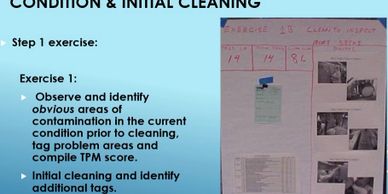
Total Productive Maintenance (TPM) is a strategy designed to enhance equipment uptime and efficiency while improving product quality. As companies progress in their Lean initiatives—reducing inventory and work in progress and increasing throughput—the reliability of equipment becomes essential. This module goes beyond mere restoration and repair, aiming to eliminate equipment-related waste through ongoing improvement.
Setup Reduction Events
Value Stream Mapping Events
Setup Reduction Events
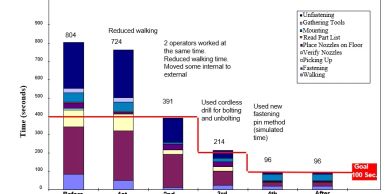
Single Minute Exchange of Dies (SMED), or Setup Reduction, is a crucial technique for minimizing the time required to switch between processes or models. This approach enhances return on investment and economic value by increasing both capacity and flexibility in operations. This module will guide you through the tools and methods needed to implement and sustain SMED activities effectively.
Value Stream Mapping Events
Value Stream Mapping Events
Value Stream Mapping Events

Securing management and executive support hinges on establishing a clear rationale for change and a strategic roadmap for improvement. Value Stream Mapping (VSM), which focuses on material flow, is a technique and methodology designed to create a shared understanding of the current state and identify opportunities for enhancement. The VSM module covers the following elements: business case, current state VSM, future state VSM, and implementation plan.
5s Events
Value Stream Mapping Events
Value Stream Mapping Events
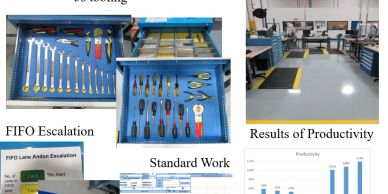
Sort, Straighten, Shine, Standardize, Sustain: A hands on visually-driven system for organizing the workplace to reduce waste. This module serves as a fundamental tool that connects workplace organization with visual management to enhance improvement across all levels.
Consulting Services for Small Businesses
Root Cause/ Problem Solving Events
Root Cause/ Problem Solving Events
Root Cause/ Problem Solving Events

This can be integrated into any Lean kaizen event or used independently to introduce teams to fundamental problem-solving tools and techniques. Participants will discover which tools are most effective for addressing specific problems.
3P Events
Root Cause/ Problem Solving Events
Root Cause/ Problem Solving Events
A 3P Kaizen event, where "3P" stands for "Production Preparation Process," is dedicated to designing or redesigning production processes and new plant layouts to enhance efficiency and effectiveness. The main objective of a 3P Kaizen event is to develop or refine production processes from the initial design stage through to full implementation. This ensures that processes are both efficient and cost-effective while aligning with the company's broader goals. The event focuses on optimizing workflows, reducing waste, and improving product quality by rethinking and reengineering processes before they are put into practice.
3p Designing New Production
Root Cause/ Problem Solving Events
3P Redesigning Existing Processes
When introducing a new product or process, the event ensures that production processes are set up for efficiency from the outset.
3P Redesigning Existing Processes
3P Redesigning Existing Processes
3P Redesigning Existing Processes
For established processes, it aims to boost efficiency by addressing and eliminating inefficiencies and incorporating improved practices.
3P Creating New Plant Layouts
3P Redesigning Existing Processes
Policy Deployment (Hoshin Kanri)
When planning or constructing a new production facility, the event helps design and implement an optimal plant layout, from the initial building plans to the final execution.
Policy Deployment (Hoshin Kanri)
3P Redesigning Existing Processes
Policy Deployment (Hoshin Kanri)
At Connek Consulting, we help organizations align strategy with execution through Policy Deployment, also known as Hoshin Kanri. Too often, companies establish business goals at the leadership level, but those goals never fully connect to daily operations. Our approach ensures strategic objectives are translated into clear priorities, measurable targets, and actionable plans throughout the organization.
We work with leadership teams to identify critical business objectives, align departmental goals, establish meaningful KPIs, and create accountability systems that drive results. Through structured communication, visual management, and continuous review processes, organizations gain better alignment, improved focus, and stronger execution across all levels of the business.
Policy Deployment creates a direct connection between long-term strategy and daily continuous improvement activities — helping organizations focus resources, eliminate conflicting priorities, and build a culture of accountability and operational excellence.